The history of taxi in Bratislava and its future
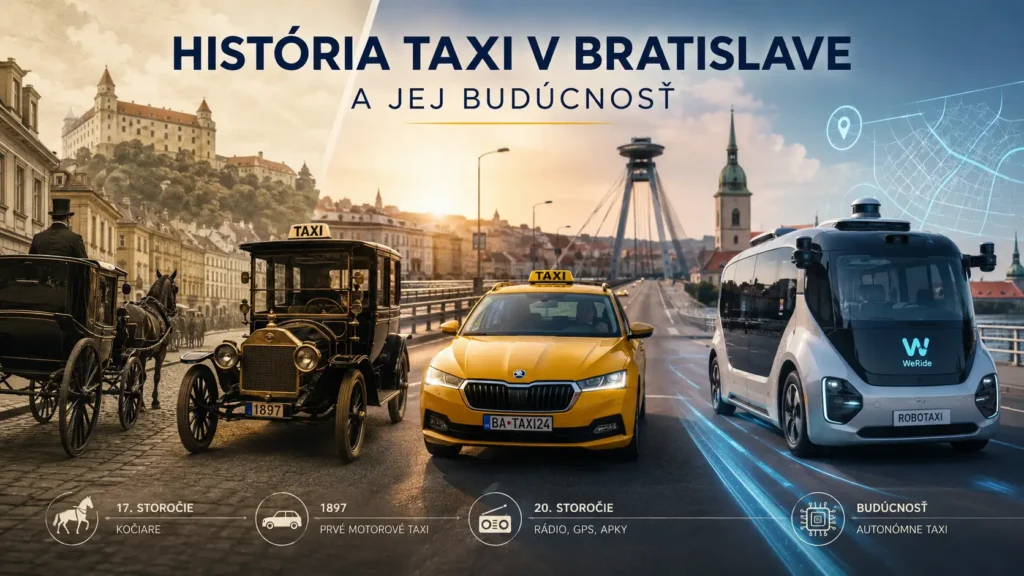
The taxi industry has been around a lot longer than most people think. The history of taxis began long before the automobile, and today we are on the cusp of its greatest revolution in history. What awaits us on the streets of Bratislava?
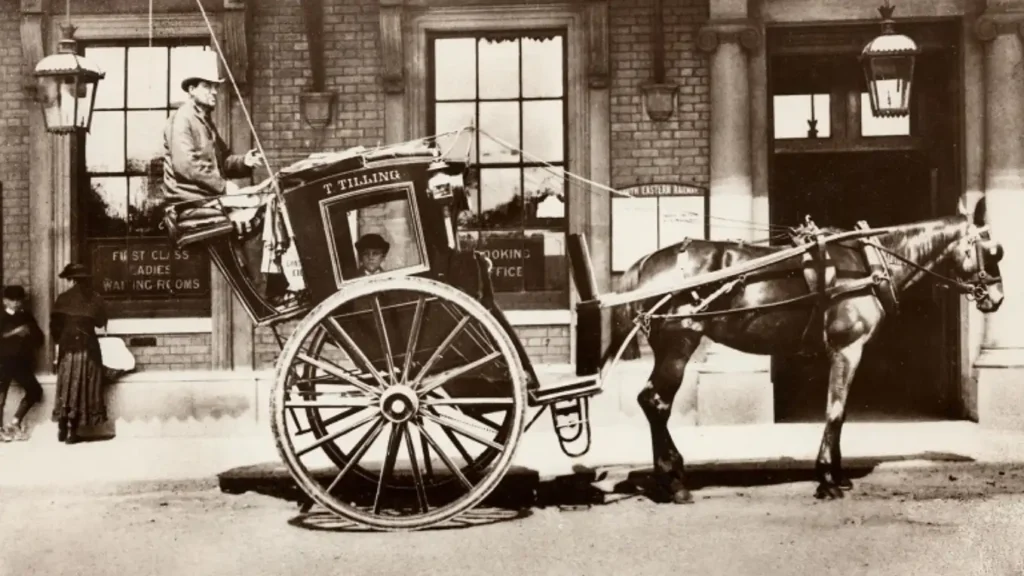
From carriages to the first taxis (17th-19th century)
The roots of today's taxi service date back to the 17th century. The first documented horse-drawn carriage hire appeared in London around 1605 and in Paris shortly afterwards in 1637. These so-called 'carriage carriages' were first seen in the early 1750s. hackney carriages - licensed carriages for hire - they were the direct ancestors of today's taxis. However, they exclusively served the wealthier classes and were too expensive for the common man.
A significant improvement was brought about in the 19th century by Joseph Hansom, who designed a smaller and lighter carriage pulled by a single horse. Hansom cab became very popular - it was more mobile in the city streets and more accessible to the wider public.
Interesting fact: the word „taxi“ is an abbreviation of the word taxicab, which is formed by combining the words taxameter (fare meter) and cabriolet (French for open carriage). Thus, the concept of taxi existed before the automobile.
Daimler Victoria and the birth of the motorised taxi (1891-1907)
The real revolution came at the end of the 19th century. In the 1891 invented by the German inventor Friedrich Wilhelm Gustav Bruhn taxameter - a mechanical device that accurately measured the distance travelled and calculated the fare. Six years later, in 1897, Gottlieb Daimler built the first production motorized taxi - Daimler Victoria - equipped with this taximeter, and delivered it to Stuttgart businessman Friedrich Greiner. Thus the world's first motorised taxi service was born.
The trend spread quickly from Germany. In 1899, entrepreneur Georges Bouton launched the first petrol taxi capable of carrying four passengers in Paris. In 1907, the motorized taxi also arrived in New York.
It was here that he wrote another chapter of history John Hertz: after reading a University of Chicago study that found yellow to be the most visible color on the road, he introduced the iconic yellow color for his fleet, and thus was born the legendary Yellow Cab (yellow cab).
Radio, GPS and smartphones: technological milestones for the taxi industry
Taxi services changed with technology during the 20th century:
- 1940s - in taxis appeared two-way radios, which allowed the dispatching centre to coordinate vehicles in real time. Customers no longer had to wait at the checkpoint.
- 80s - 90s - gradual introduction GPS improved route planning and driver navigation.
- 2009 - origination Uber in San Francisco ushered in the era of digital platforms. Smartphone apps connected passengers with drivers directly, without dispatching. Later, Bolt and others followed suit.
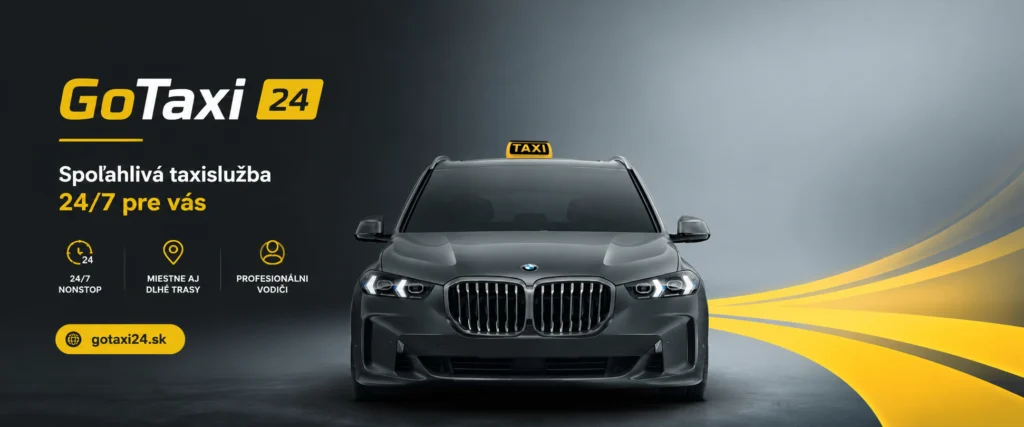
- Today - modern taxi services such as GoTaxi24 combine telephone and online ordering, GPS tracking, cashless payments and just-in-time bookings.
History of taxi service in Slovakia
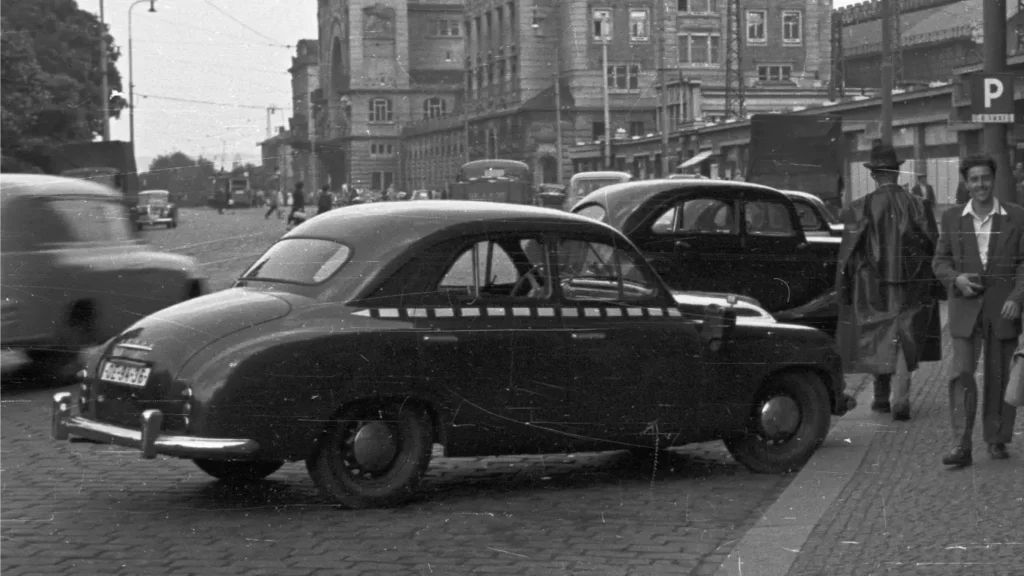
The interwar period and the first taxi
Taxi service in Slovakia began to develop between the two world wars. It was perceived as a luxury available only to the wealthier classes. In Bratislava, Košice and Žilina, individually adapted cars, mostly older converted vehicles, were driven. Licensing of drivers and regulation of tariffs began to emerge already in this period - as a first step towards the professionalisation of the industry.
Socialism: ČSAD, Tatra 603 and the state monopoly (1948 - 1989)
After 1948, the taxi industry came under state control. The dominant role was played by state-owned enterprises, especially CSAD, which had a monopoly on taxi services. The fleet consisted of models such as Skoda 1200, Volga and luxury Tatra 603 - vehicles reliable and easy to maintain in the conditions of socialist industry. Prices, types of vehicles and quality of service were centrally regulated, which on the one hand ensured uniformity, on the other hand limited innovation and competition.
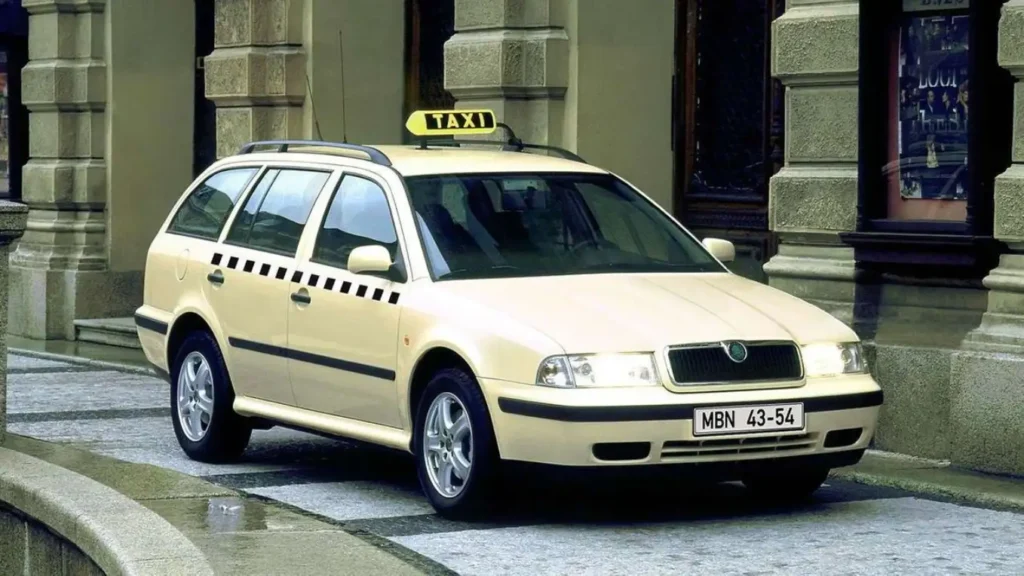
After 1989: privatisation, competition and digitalisation
The Velvet Revolution opened the market to private operators. In the 1990s, private entrepreneurs entered the market, bringing healthy competition, a more varied fleet and a higher standard of service. Telephone ordering and later computerised dispatching were introduced.
Today Bratislava taxi services are like GoTaxi24 equipped with modern systems: GPS tracking, online booking, cashless payment and the possibility of ordering for a precise time - including specialised airport transfers to airports Bratislava, Schwechat Also Budapest.
If you need reliable taxi Bratislava to the airport or taxi Bratislava Schwechat, GoTaxi24 runs non-stop 24/7 and you can book a ride to the airport several days in advance.
Autonomous taxi is coming: Bratislava on the world map
And this is where the most interesting chapter in the history of the taxi industry begins - the one that is being written right now.
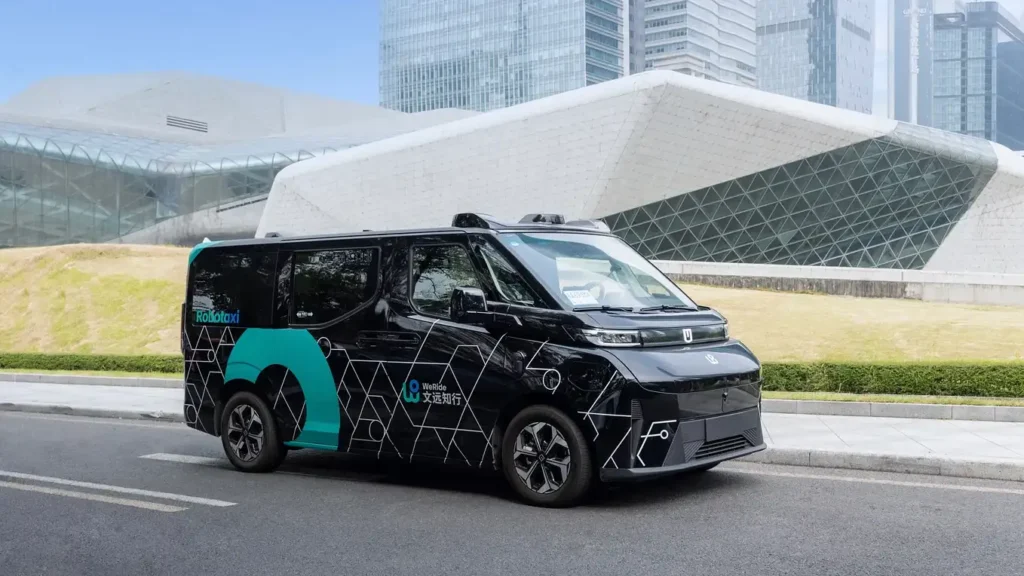
Chinese company WeRide, a global leader in autonomous driving, closed in March 2026 strategic agreement with the Slovak company DiusAI under the initiative ELEVATE Slovakia. This is the fourth European market for WeRide after France, Belgium and Switzerland.
WeRide is not a startup, it's the first publicly traded company focused robotaxi, whose autonomous vehicles have been tested or operated in more than 40 cities in 12 countries around the world. The company is also the only technology firm to have obtained autonomous driving permits for eight markets at once - China, UAE, Singapore, France, Switzerland, Saudi Arabia, Belgium and the USA. Its shares are traded on both the NASDAQ and Hong Kong stock exchanges.
What specifically is planned in Slovakia?
The Ministry of Transport of the Slovak Republic, the capital city of Bratislava, the Slovak Academy of Sciences and the Slovak Post participate in the project. WeRide plans to deploy its entire portfolio of vehicles in Slovakia:
- Robotaxi GXR - autonomous taxi based on a modified Farizon SuperVan electric microbus (Geely Group brand), equipped with lidar technology and advanced cameras with a range of 200 metres
- Robobus - autonomous bus for public transport
- Robovan - vehicle for logistics and parcel delivery in cooperation with Slovak Post
- Robosweeper - intelligent cleaning vehicle for municipal services of the city of Bratislava
Schedule: The first WeRide vehicles should arrive in Slovakia in spring 2026, with pilot testing planned for the first half of 2026 in Bratislava. In the next phase, expansion to Košice and the High Tatras is planned. All tests are supervised by the Ministry of Transport of the Slovak Republic in accordance with Slovak and European regulations.
Transport Minister Jozef Ráž said that the project will allow Slovakia to verify technologies transparently, with the participation of the state and with an emphasis on the public interest. Bratislava's chief strategist Ján Mazúr stressed that the testing can provide real data that can be used in urban transport planning.
WeRide's long-term goal is to have more than 2,600 active robotaxis by the end of 2026 and tens of thousands of vehicles worldwide by 2030.
What does an autonomous taxi mean for the average passenger?
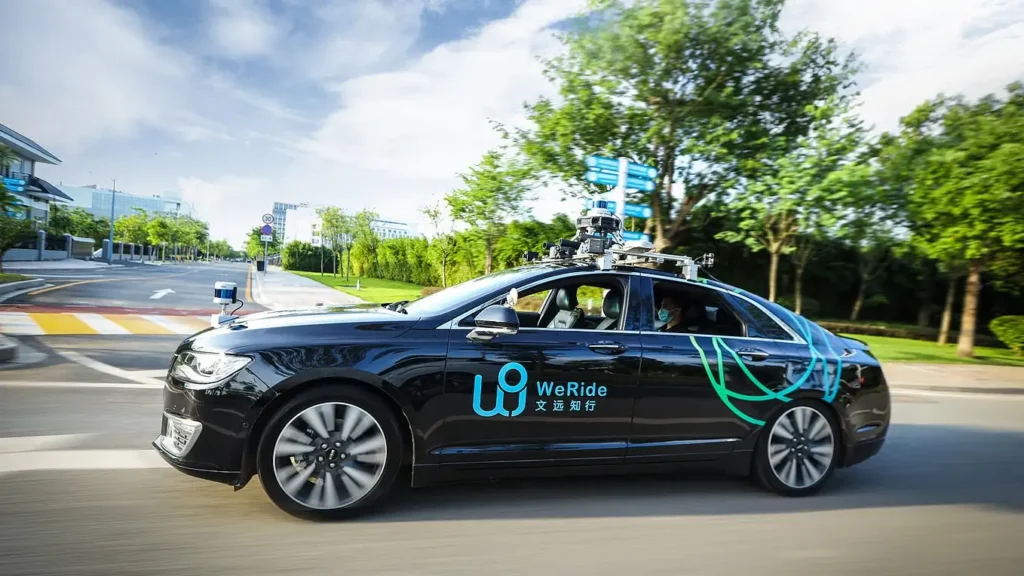
Autonomous vehicle levels L4 (full automation under defined conditions) works without driver intervention. The sensor system consists of lidars, cameras and radars, while a powerful computing unit processes the data in real time and drives the vehicle just like an experienced professional chauffeur.
For the ordinary traveller, this may in the future bring:
- Lower prices - Without driver labour costs, operating costs are significantly reduced; WeRide expects the price of the vehicles to fall by about 15 % as production increases
- Availability at any time - robotaxi does not need a break or rest
- New forms of public transport - Autonomous minibuses can serve routes now unprofitable for human drivers
- Faster logistics - autonomous vans can also operate at night
However, there are real challenges ahead of mass deployment: legislation needs to be adapted to the new vehicle types (the Slovak government was preparing analyses of legislative changes as early as March 2026), the public needs to build trust in the technology, and urban infrastructure needs to be ready.
What does this mean for classic taxi services in Bratislava?
Autonomous taxis will not replace traditional taxi services overnight in the coming years. It is a long-term process that requires extensive testing, legislative changes and a gradual building of public trust.
Classic taxi services continue to have strong advantages, that an algorithm can hardly replace: personal approach, perfect knowledge of every street in Bratislava, flexibility in non-standard situations and human contact. An experienced driver can advise you on the route, help you with your luggage at the airport or simply make the journey more pleasant with a friendly chat.
If you are looking for taxi service in Bratislava, where you can know the price of the ride in advance and book a taxi for the exact time - see our Price list or book a taxi online right now.
The future of taxi service will probably be a combination of both worlds - technologically advanced autonomous solutions and reliable human drivers who know Bratislava like the palm of their hand.
FAQ - Frequently Asked Questions
When will autonomous taxis come to Bratislava?
Pilot testing of WeRide vehicles is planned for the first half of 2026 in Bratislava, under the supervision of the Ministry of Transport of the Slovak Republic. Commercial operation will only be possible after all legislative and safety conditions have been met.
Who is behind the project of autonomous vehicles in Slovakia?
Behind the project is the ELEVATE Slovakia initiative, coordinated by DiusAI - a project of Patrik Tkáč from the J&T Group. The Ministry of Transport of the Slovak Republic, the capital city of Bratislava, the Slovak Academy of Sciences and the Slovak Post participate in the project.
Is robotaxi WeRide safe?
WeRide has autonomous driving permits in eight countries, including the US, China, the UAE and several European countries. The vehicles are equipped with lidars, cameras and radars with a range of 200 meters.
Where can I book a taxi in Bratislava today?
GoTaxi24 is available 24/7. Order online taxi or see our Services a vehicles.
Will autonomous taxis replace conventional taxi services?
Not in the short term. It is a gradual process over years. Licensed taxi companies with vetted drivers will remain relevant in the digital future.


