Airport parking: what happens to your car after a week?

The car is standing. Seven days, two weeks, sometimes a month. From the owner's point of view, nothing happens - the keys are in the pocket, the holiday is running. From the car's point of view, it's a completely different story. Airport parking is not just about how much you pay. In those seven days, things can happen to your car that only those who find their car in a state of disrepair upon arrival think about. Dead batteries, flat spots on tyres, rodents in the engine compartment, prices climbing into three figures - and in some modern cars, even the scenario where the car can't even be unlocked after a week. Let's take a look at what can happen and when it really pays to leave the car at home.
How much will a week of parking cost you in 2026
Let's start with what can be quantified. Parking prices at M. R. Štefánik Airport have stabilised in recent years, but the differences between the various options are still significant. A week's parking directly at Bratislava Airport costs €79, while at a comparable car park near Vienna's Schwechat you'll pay between €99 and €118. In Budapest, you'll pay around €50 for parking.
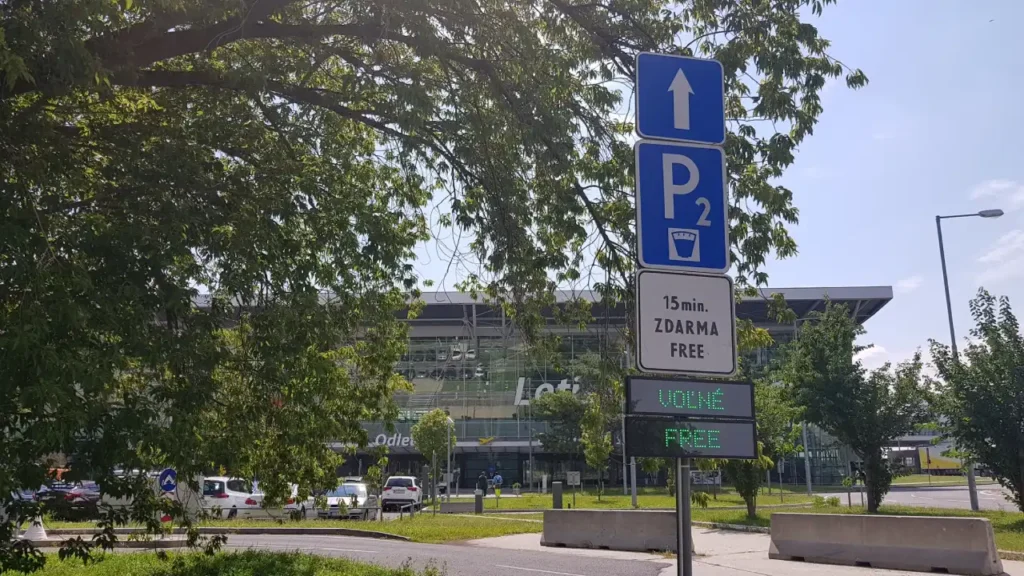
Bratislava Airport has three public car parks. P1 with a capacity of 106 spaces is for short-term parking only - loading and unloading passengers within 15 minutes is free of charge. P2 offers 670 spaces for long-term parking and P3 has a capacity of 338 spaces with a better price, but is 1.5 km away from the terminal.
For an overview, here are the indicative prices for long-term parking in 2026:
| Parking | Distance | 7 days | 14 days | Note |
|---|---|---|---|---|
| BTS P1 | at the terminal | Inappropriate | Inappropriate | 5 €/hour, for short stay only |
| BTS P2 | 3-5 min walk | 95€ | 170€ | main long-term parking |
| BTS P3 | 1.5 km (20 min on foot) | 90 € | 160 € | free minibus on call |
| External car parks | 1-3 km | 50-85 € | 90-135 € | included in price, camera system |
| Vienna Schwechat | at the terminal | 120-190 € | 170-350 € | by distance from the terminal |
For a three-week trip, the difference between on-site and off-site parking can range from €100 to €200. For the difference, you get a return ticket to most European destinations.
If you're thinking of an alternative, airport transfer by GoTaxi24 for two to four people on the way there and back is often cheaper than two weeks' parking at the airport, while the car is safely at home in the meantime.
Dead battery: the most common reason why a car won't start on arrival
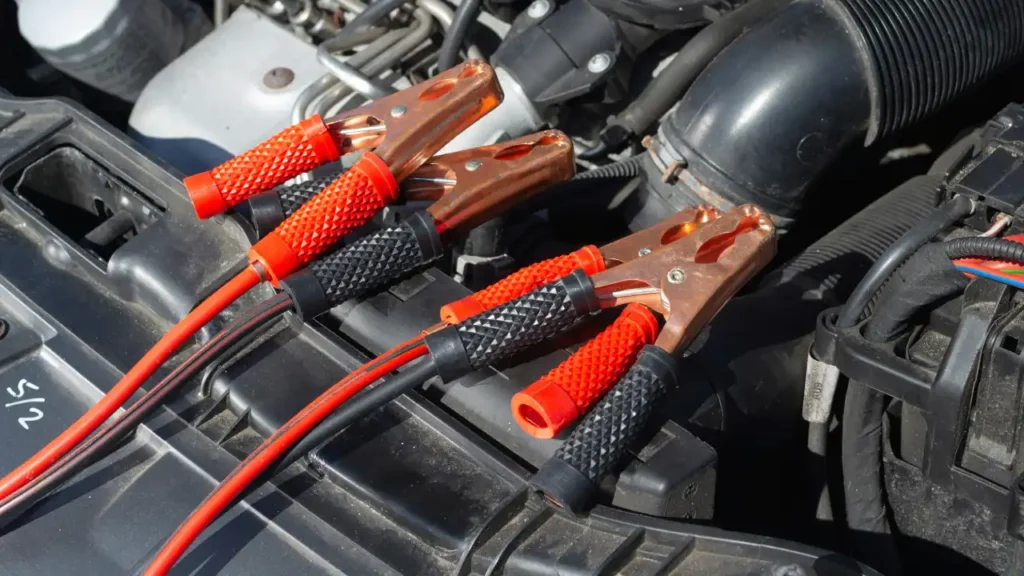
This is a classic. The car sits for seven days, you come back from holiday, turn the key and all you hear is clicking. At best. At worst, you hear nothing at all.
Modern cars have a number of systems that remain in stand-by mode even after the engine is switched off. Alarms, central locking with remote control, location tracking, on-board computers that wake up periodically to check the status of the systems. Each of these draws a small amount of current continuously. With a healthy battery and a short standstill, this is not a problem. However, with an older battery or standing for more than ten days, the situation changes.
The frost makes it worse. In sub-zero temperatures, a lead-acid battery loses up to a third of its capacity. If you flew out in December with a two-year-old battery that's barely holding up, you may have an unpleasant surprise when you return.
The trickiness of modern cars with two batteries
Here we come to the thing that almost nobody thinks about. Some modern vehicles - typically the Mercedes-Benz A-Class, B-Class, C-Class, E-Class, S-Class, but also the BMW range and other premium brands from mid-2010 onwards - have two batteries. One main (larger, starting battery) and one auxiliary (smaller, so called auxiliary battery).
The principle is as follows: the main battery is used to start and power the basic systems. The auxiliary battery powers specific functions - the start-stop system, some assistance systems, the electronically controlled gearbox and other electronic modules. In some models, it's even responsible for getting the car into park in the first place.
And now comes the tricky part. When standing for long periods of time, the auxiliary battery - which is small, often only 12V/1.2Ah - will be the first to drain. While the main battery is still half charged, the auxiliary battery has long since dropped below the critical level. In some cases, the car then behaves absurdly: the main battery has enough power to start, but the electronics controlling the fuel system, the locks or the gearbox refuse to work because they are running on the auxiliary battery.
The result? You are standing in front of a car that is can't even be unlocked by remote control, with the key in the lock, nothing responds to the electronic signal, and even if you get in with the mechanical key hidden in the fob, the alarm may go off and the car will refuse to shift, start or open the bonnet. Some owners end up calling a towing service, which must bring them a 12V power supply and connect it via an access point under the car.
The mechanics who repair such cars on a daily basis make it clear: if you have a car with an auxiliary battery and plan to stand for more than a week, the risk is never zero. Some manufacturers directly recommend connecting a trickle charger - a maintenance charger - when standing for more than seven days.
This is of course an option that is not practical for airport parking.
Tyres: flat spots and ageing
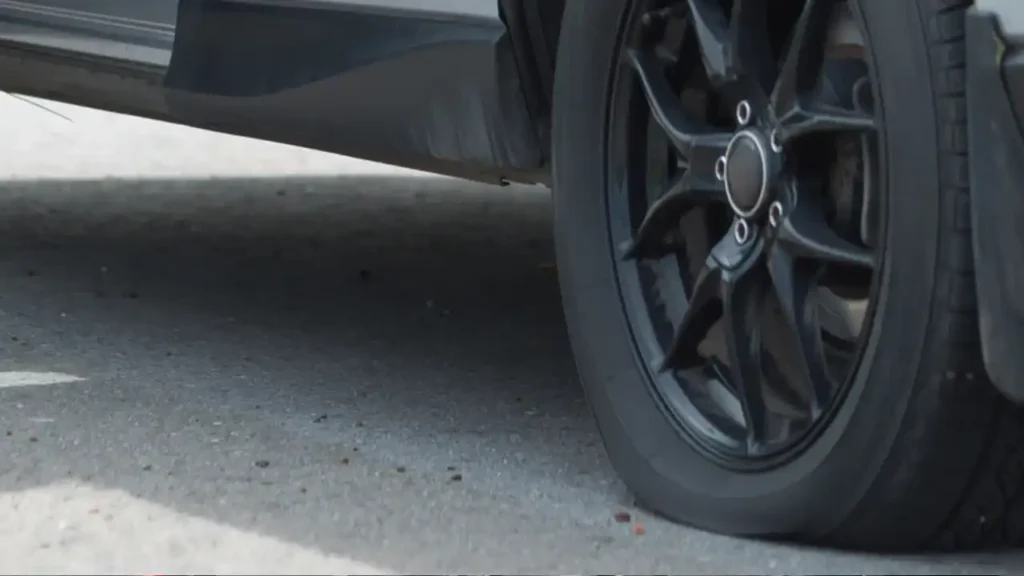
The car weighs between 1 200 and 2 000 kilograms. All this weight sits on four palm-sized contact surfaces. When it sits in one place for several days, a deformation can form on the tyres.
Point S tyre service directly states on its website, that flat spots can start to appear on a tyre after just 30 days of sitting in one place. With the usual weekly standing at the airport this is not yet critical, but two or three weeks in winter, when the rubber is stiff, already has an effect.
The risk is higher when:
- older tyres (5 years and older)
- low-profile tyres (most premium cars)
- vehicles with above-average weight (SUVs, vans, electric cars)
- standing in extreme temperatures (frost below -10 °C or heat above 35 °C)
Experts also warn, that both high and low temperatures affect the elasticity of the rubber and contribute to the deformation process. These deformations may flatten out after the first few kilometres of driving, but it is not safe to drive on them. Steering wheel vibration after starting from a long term parking lot is a warning sign that is not worth ignoring.
Rodents: new, unexpected passengers
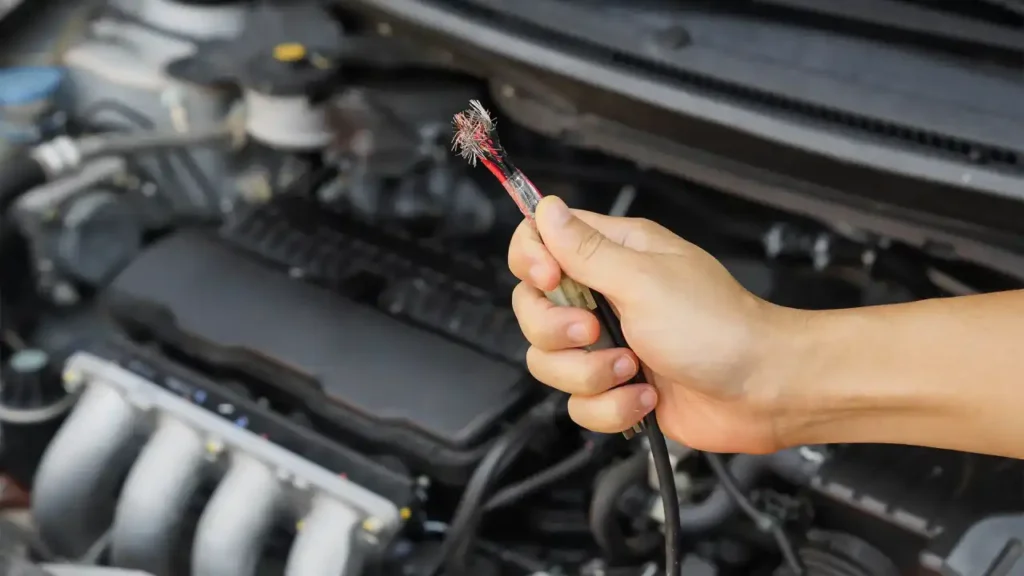
What sounds like an urban legend is actually a well-documented problem. Mice, martens and other small mammals can make a comfortable home in the engine compartment of a stationary car. The engine is warm for hours after shutdown, the compartment is dry, protected from rain and predators.
What attracts them? The smell, the insulating materials, the plastic wiring. Some modern manufacturing materials - especially the bio-plastics on cable insulation that manufacturers have been using since 2010 for greener production - are literally tasty to rodents. The result can be a chewed-up bundle of cables that costs between 300 and several thousand euros to repair at an authorised service centre.
The risk is not theoretical. In particular, car parks on the outskirts of the airport, close to fields and bushes, are more problematic in this respect. Medium and closed parking houses such as the Parkhaus at Vienna Schwechat are safer than open areas in this respect.
Security: theft, damage, breakage
Airports are magnets for organised crime, thanks to the fact that car parks are usually full of cars for weeks in advance. Thieves know they have at least a couple of days before the owner even realises something is wrong.
The official car parks of Bratislava Airport are secured by ramps and camera system, which significantly reduces the risk. External car parks in the area vary - some have 24/7 security, fencing and lighting, others operate as unfenced areas with occasional checks. It is worth checking the specific security before booking.
The second, less dramatic but more common problem is mechanical damage from neighbouring cars - Scuffed sides, broken rear-view mirrors from suitcases being unloaded from vans, hail, falling branches. Airport car parks are often full and manoeuvring aisles narrow. For larger cars, the risk is more real.
And thirdly - thieves don't need to steal the car, they just need the contents. Navigation devices left in the holders, a bag in the back seat, chargers, dash cameras. It's worth cleaning the whole car before you go on holiday. Not just for the thieves, but also for the smells, which intensify many times over in a week in a closed car.
When airport parking pays and when it doesn't
To be fair - airport parking has its advantages too. For quick, short business trips (two-three days) it is often the most convenient solution. For some, flexibility is important: you're flying at an unusual time when public transport doesn't run, or you're planning multiple transfers on the day of arrival.
Parking is worthwhile, if:
- you are flying for a short period of time (up to three days)
- you have a newer car with a proven battery and quality tyres
- you have pre-booked secure parking with transfer
- you have no one to ask for a lift and public transport is impractical
Parking is not worth it, if:
- you are flying for a week or longer
- you have an older car where the risk of a dead battery is real
- you own a vehicle with an auxiliary battery and sensitive electronics
- you fly in winter, when all the risks are multiplied
- the price of parking exceeds the price of a two-way transfer
For longer journeys, the maths is simple: if a taxi ride there and back costs you €70, for example, and parking for two weeks costs €150, you'll save €80. In the meantime, the car is at home, in a familiar place where it is not in danger.
On the way to Vienna, the ratio is even more interesting. If you drove your own car to Schwechat and parked there for two weeks, you could get 175 euros or more. Transfer from Bratislava to Schwechat with a fixed price and the certainty that you won't miss your departure due to traffic congestion, it works out significantly cheaper. You can find the fixed price list at GoTaxi24 price list page.
How to prepare your car if you do leave it in the car park
If you've decided to park, a few simple steps before you leave reduce the risks:
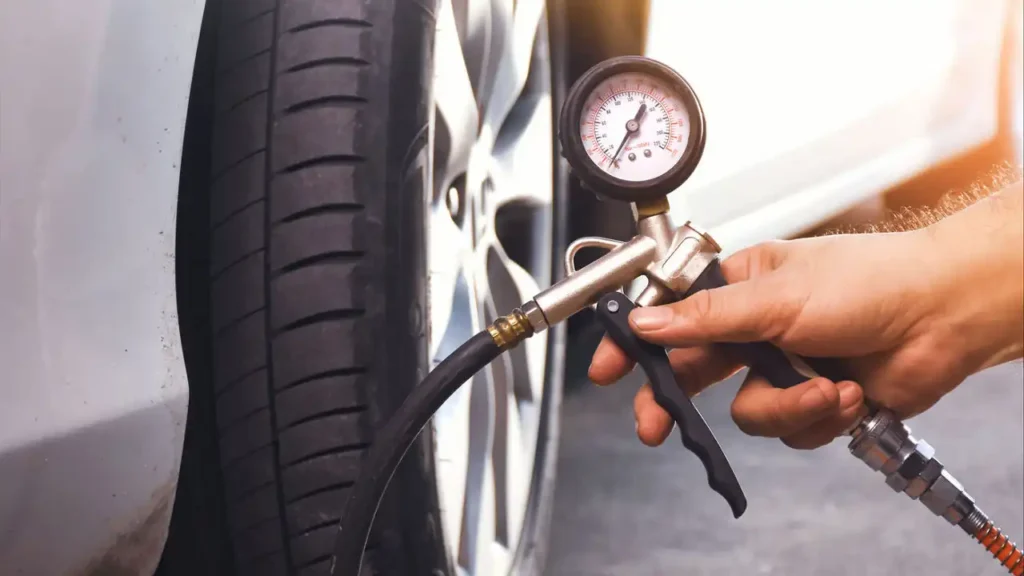
- Inflate your tyres a little more. 0.2 to 0.3 bar above the recommended pressure. The tyres thus suffer less from flat spots.
- Switch off all electronic devices. Disconnect the dash cam, which may remain in stand-by mode, then remove the sat nav from the holder.
- Do not wash the car just before driving off. A wet car in cold weather has a higher risk of corrosion and seals freezing.
- Check the age and condition of the battery. If it's more than three years old and the starter occasionally clicks twice, consider deferring parking.
- Valuable things always out. Without exception. Even the charger in the compartment attracts attention.
Finally, always book parking in advance. In high season, P2 is full at the airport, and standing in a busy car park looking for a space when you arrive with your suitcase in winter is a situation that can be avoided with a click from home.
Alternative: leave the car at home
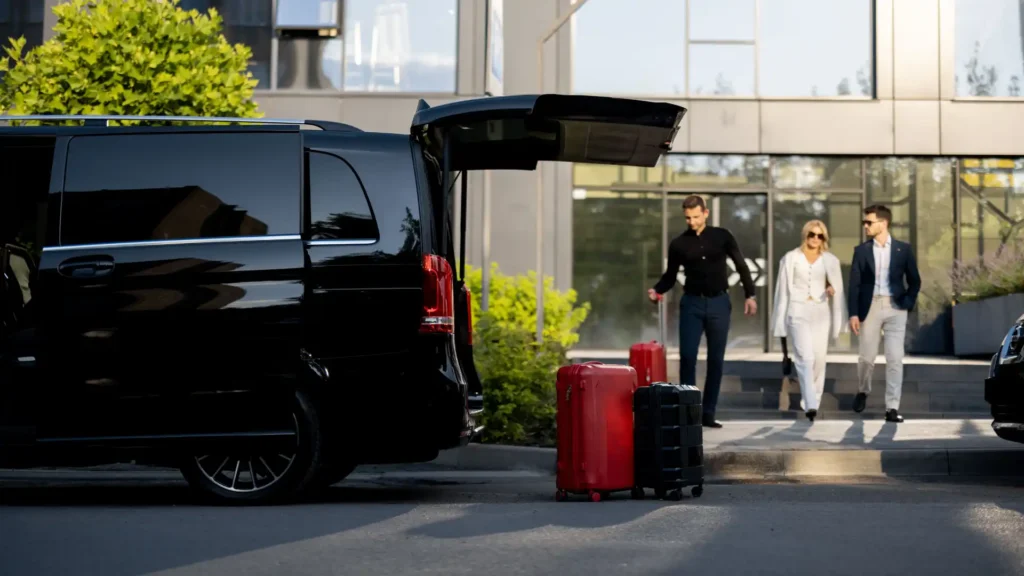
The simplest solution to all of the above risks is trivial - the car doesn't have to move. Bratislava airport, Schwechat and Budapest are all within easy reach, where a professional airport transfer makes sense both financially and time-wise.
GoTaxi24 operates 24/7, which means that we can take you to your morning flight at half past five and pick you up after your midnight arrival. If you want to make an estimate for a specific trip, book a ride and you can find out the price via the online form or by phone.
Leave your car safely at home
Fixed price, 24/7 transfer to Bratislava, Schwechat and Budapest
Book a rideFrequently Asked Questions
Does a modern car run out of battery in a week of parking?
With a healthy battery and a car less than five years old, the risk is low, but not zero - especially in winter. For older cars or models with an auxiliary battery (Mercedes, BMW, some Audis), it can happen that the car won't start or can't be unlocked after a week.
What is the cheapest parking at Bratislava Airport?
External car parks around the airport (up to 3 km away) offer seven-day parking from around €50 to €75, including a free transfer to the terminal. Directly at BTS, the cheapest option is P3 car park (approx 95 euros for seven days), but it is further away from the terminal.
Is it worth leaving the car in Schwechat on the way to Vienna?
For short journeys, yes. For longer trips (a week or more) it is more economical and comfortable to use transfer to Vienna-Schwechat airport - Parking there costs between 120 and 190 euros, transfers for 1 to 4 people are often lower.
What should I do if the car won't start on arrival?
First, try a conventional start-up using cables from another driver. If you have a car with an auxiliary battery and even the remote control won't respond, contact a towing service or your brand's service department - most insurance companies cover towing from an airport car park as part of their roadside assistance services.
Are the car parks at Bratislava Airport guarded?
The official car parks P1, P2 and P3 are secured by ramps and CCTV, but are not physically guarded 24/7. External car parks vary - some have 24-hour security guards, others only have CCTV. It is worth checking the specific level of security before booking.
When is it really worth taking a taxi instead of your own car?
For journeys longer than a week, for flights in the early morning or at night, in winter and if you have an older or premium car with more complex electronics. Complete guide for Bratislava further summarises when a taxi is the most sensible choice.


